
Introduction: A Morning at the Dock
Picture this: first shift lands, pallets stack up, and radios chirp like birds at sunrise. By 8 a.m., your logistics management system already looks tired. The queue at inbound crawls, even though the team is wide awake and ready. Data says last month showed 12% idle time and a 3% mis-pick rate, plus RFID gates flagged a 7% read error. Eish, that stings. You feel it in the opex line and in the crew’s mood. The floor is busy, but the flow is slow. Why? And what knob can you turn that actually moves throughput, not just paperwork?
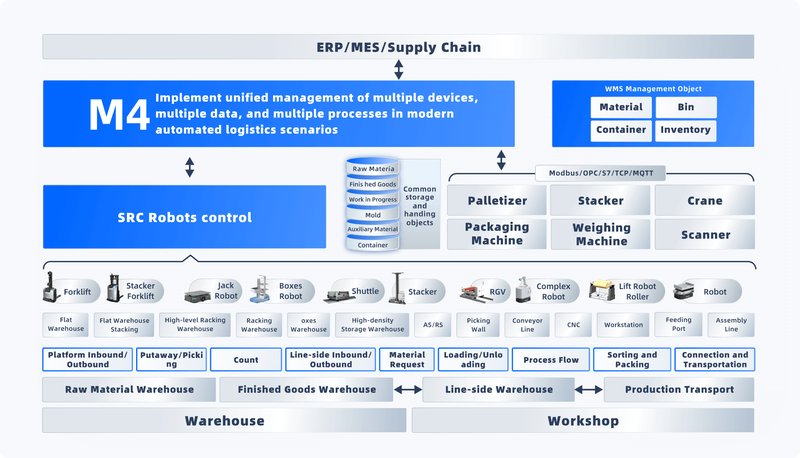
Here’s the kicker: tiny lags kill rhythm. API latency between WMS and devices adds seconds. Seconds add minutes, then hours (ja, small things pile up). One forklift waits for a task while another sits on a full bay. Pick paths cross. Put-away rules fight the clock. So, bru, the question is simple: if the work is there and the people are there, why does the line still wobble? Let’s unpack where the hidden friction lives and how to compare fixes that last—then choose what’s next.
Deeper Layer: The Pain You Don’t Log in Tickets
Where do things actually break?
The first miss sits in orchestration, not effort. A logistics warehouse management system often “knows” the inventory, but struggles to signal the next best move at the right second. Legacy task waves push jobs in batches, so resources clump. PLC talks to WMS through thick middleware, and each hop adds delay. Edge computing nodes exist, but they may run stale logic. When the network jitters, scanners resend, and you see ghost lag—funny how that works, right? The result: drivers wait, totes wait, and the clock wins.
Another pain hides in feedback loops. Many setups don’t learn from the floor fast enough. Pick-to-light shows the slot, but slotting rules stay static. AGV routes ignore live congestion. Power converters keep robots charged, yet charging windows don’t match surge demand. Look, it’s simpler than you think: if signals are slow or blind, decisions drift. The fix begins with continuous signals, tighter device timing, and smaller jobs that can shuffle mid-run. That’s where a smarter control layer inside the WMS and device APIs pays off without asking your team to work harder.
Comparative Outlook: Principles That Change the Curve
What’s Next
Let’s compare old waves to new flow. Batch-first systems push work; event-driven systems listen and react. A modern logistics warehouse management system can stream task events in real time, re-balancing picks when an aisle clogs. Think principles, not products: edge computing nodes run micro-logic near scanners; digital twin models simulate slot moves before you commit; time-series telemetry feeds a predictor that staggers inbound so outbound won’t choke. It sounds fancy, but the method is plain: shorten the loop from signal to action—and make that loop robust when the network sneezes.
Here’s a quick lens you can use tomorrow. First, test comparative flow: wave-push versus event-pull on one lane for a week. Second, measure stability under stress: turn off a node and watch if tasks reroute without manual calls. Third, check energy and motion fit: do AGVs, humans, and chargers sync, or do power converters force awkward breaks? Over a month, you’ll see picks smoothing out, fewer resends, and clearer dock turns. The insight is simple but strong: speed grows when decisions get closer to the work, and learning stays live. To choose well, track three metrics: task assignment latency (ms from scan to next job), congestion recovery time (minutes to normal after a block), and re-slot ROI (throughput gain per 100 moves). Wrap these into your next trial and keep the people looped in—because the best flow is felt on the floor, not only on a dashboard. That’s how you build pace without burning the crew—always the point, neh? For deeper technical angles and practical frameworks, see work from partners like SEER Robotics.