
The petroleum drilling industry faces unprecedented challenges in maintaining operational safety while developing increasingly complex projects in challenging environments worldwide. Drilling Simulators have emerged as transformative tools for addressing these challenges, providing realistic training environments that prepare professionals for the demanding conditions of modern drilling operations. These sophisticated systems replicate the physical, operational, and environmental aspects of actual drilling activities, allowing trainees to develop critical competencies without exposure to the risks associated with real field operations while enhancing learning effectiveness through immersive experiences that bridge theoretical knowledge and practical application.
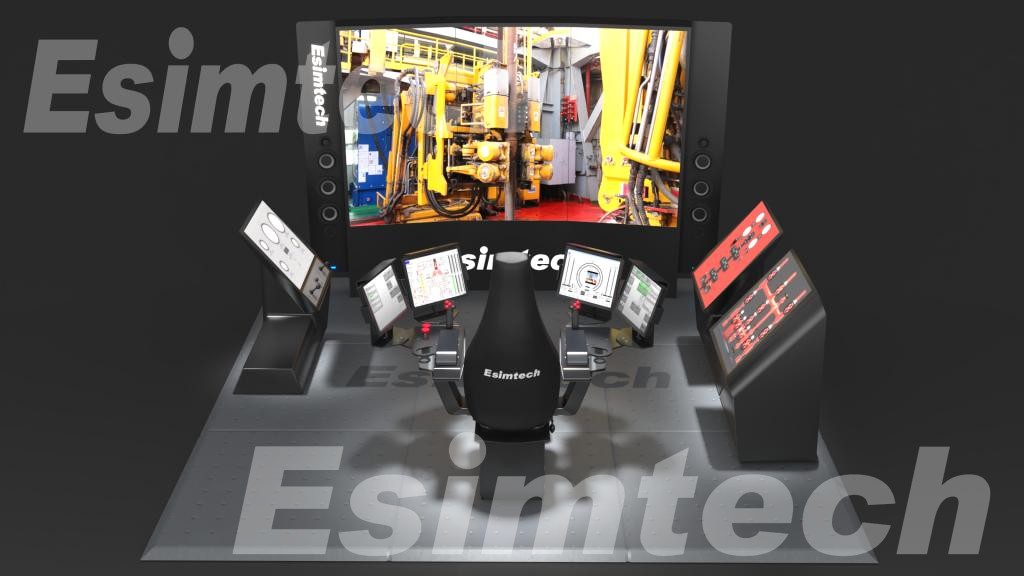
Modern Drilling Simulators incorporate advanced technologies that create comprehensive learning experiences far beyond traditional training methods. High-fidelity hydraulic systems simulate the physical feedback of operating actual drilling equipment, providing realistic force feedback and response characteristics that develop muscle memory and operational intuition. Sophisticated software models calculate real-time responses to operational decisions based on accurate mathematical representations of downhole conditions, equipment behavior, and fluid dynamics. Visual display systems provide panoramic views of simulated drilling environments, complete with equipment animations, parameter displays, and situational indicators that enhance spatial awareness and procedural understanding. Audio systems reproduce the characteristic sounds of drilling operations, from machinery operation to communication protocols, creating a multisensory training environment that improves learning retention and skill transfer to actual operational contexts.
Comprehensive Training Applications and Implementation Strategies
Drilling simulators serve multiple critical training applications across different operational phases, personnel categories, and competency levels within petroleum organizations. For drilling crew members, these systems provide essential practice in routine procedures including pipe handling, mud system management, BOP operation, and parameter monitoring. For well control specialists, simulators offer realistic scenarios for practicing kick detection, shut-in procedures, well killing operations, and emergency response under various conditions and complications. For drilling supervisors and engineers, simulation training develops decision-making skills for operational planning, resource allocation, problem diagnosis, and optimization strategies. The comprehensive nature of these training applications ensures that all personnel involved in drilling operations develop the competencies necessary for safe, efficient, and effective performance across diverse operational contexts.
The implementation of effective drilling simulation training programs involves several important strategic considerations that organizations should address systematically to maximize benefits and ensure successful outcomes. First, conduct comprehensive training needs assessments that analyze current competency levels, operational requirements, safety performance indicators, and regulatory expectations to identify specific training gaps and development priorities. Second, design structured training curricula that progress logically from fundamental concepts to advanced applications, incorporating appropriate balances between theoretical instruction, practical simulation exercises, and competency assessment methodologies. Third, ensure training personnel possess appropriate technical expertise, pedagogical skills, and industry experience to deliver effective simulation-based instruction that addresses both technical competencies and operational decision-making capabilities. Fourth, implement objective performance evaluation systems that measure trainee progress, identify areas for improvement, and validate competency achievement against established standards and benchmarks. Fifth, establish continuous improvement mechanisms for collecting trainee and instructor feedback, monitoring training effectiveness, and updating programs based on operational experience, technological advancements, and evolving industry requirements.
One particularly valuable application of drilling simulators involves emergency response training for various incident scenarios that may occur during drilling operations. Modern systems can recreate diverse emergency situations including equipment failures, well control events, weather emergencies, medical incidents, and environmental threats with realistic complexity and time pressure. These simulations allow personnel to practice coordinated response actions, communication protocols, decision-making processes, and evacuation procedures in a controlled environment where mistakes have no real-world consequences but provide valuable learning opportunities. The psychological aspect of emergency training is particularly important, as simulation experiences help develop the mental resilience, situational awareness, and decision-making confidence necessary for effective performance during actual emergencies. This aspect of training has become increasingly recognized as essential for maintaining safety standards and operational readiness in the high-risk environment of petroleum drilling operations, where rapid and appropriate responses to unexpected situations can prevent minor incidents from escalating into major accidents with significant consequences.
The technological evolution of drilling simulators continues to advance rapidly, with several emerging trends likely to shape their future development and application across the petroleum industry. Virtual and augmented reality technologies are being integrated to create more immersive training environments that enhance spatial awareness, procedural understanding, and situational cognition through three-dimensional visualization and interaction capabilities. Artificial intelligence algorithms are being applied to create adaptive training scenarios that respond dynamically to trainee actions, learning progress, and competency development, providing personalized learning experiences that optimize skill acquisition and retention. Cloud-based simulation platforms are enabling distributed training capabilities that allow personnel at different geographical locations to participate in collaborative exercises, share best practices, and develop consistent operational approaches across organizational units. Data analytics tools are providing deeper insights into training effectiveness, competency development patterns, and performance correlations that inform continuous improvement of both training methodologies and operational procedures. These technological advancements, combined with growing industry emphasis on safety, competency assurance, and operational excellence, suggest continued expansion and sophistication of drilling simulation training across the global petroleum sector.
As drilling operations extend into deeper waters, more challenging geological formations, and more complex technical configurations, the importance of comprehensive simulation training becomes increasingly apparent for maintaining safety, efficiency, and competitiveness. Drilling Simulators provide essential tools for preparing personnel to meet these challenges effectively while developing the competencies necessary for successful performance in demanding operational environments. Their ability to replicate realistic conditions, facilitate skill development without risk, support continuous competency improvement, and adapt to evolving requirements makes them invaluable assets for organizations committed to operational excellence in the complex world of modern petroleum drilling. With ongoing technological innovation, increasing industry adoption, and demonstrated effectiveness in improving safety and performance, drilling simulators are likely to play an increasingly central role in shaping the future of petroleum industry training and operations worldwide.